
A Jonty Toosey Film
EXIT THE RABBIT HOLE
Coming Soon - January 2027
Exit The Rabbit Hole (2026) Official Trailer

Cast
Will Medland
Lillian Nero
Philippine Lazare
Stav Gatzios
Pépin Verhaeghe
Camilla Rutherford
Francois Damiens
Crew
Producer • Ariane Lippens
Director & writer • Jonty Toosey
Cinematography • Chris Stevens
Costume • Bren
Make Up & Hair • Maria Zola
Art Director • Amandine Cumps
Sound Recordist • Guilhem Donzel
Editor • Matyas Veress
Music • Hidde Doms, Stanley David de Lossy, Nelio Ménier, Corentin Simonis, Luca Sabbi
During a long-awaited debauched weekend, an anxious young man must choose between his drug-fuelled friends and a strange girl his toxic mother forced him to bring, after a car crash leaves the girl with a dangerously septic injury.

SYNOPSIS
Freddie, a 25-year-old paralysed by anxiety and an unhealthy relationship with his toxic mother, is tricked into an unusual ‘favour’: taking Paloma, a girl he has never met, on a hedonistic weekend trip with a bunch of friends to the Belgian countryside. Unbeknown to him, they are half-siblings; the product of Freddie’s father’s abuse of his childhood au pair, Jadwiga. Freddie’s mother, aware of the bloodline, has orchestrated this trip as a perverse ‘test’ to see if her son could unknowingly commit incest.
The weekend begins with a violent car crash. Although the group emerges seemingly unhurt, Paloma sustains a nasty wound to her arm. As the weekend descends into a drug-induced haze at a disused house, Freddie and his self-indulgent friends - Fran, Emilio, and Max - remain oblivious to Paloma’s rapidly deteriorating health. While the music thumps, the wound turns septic, blackening and weeping in a silent, deadly countdown.
The psychological trap springs shut when Paloma’s desperate cry for help finally pierces Freddie’s passivity. Forced into a race against time, he uncovers the horrific truth of their shared lineage from Jadwiga. Armed with the reality of his mother’s depravity, Freddie is compelled to take a stand and confronts his mother’s twisted psychological games. In a final stand, he seizes his independence and fights to save the sister he never knew he had.
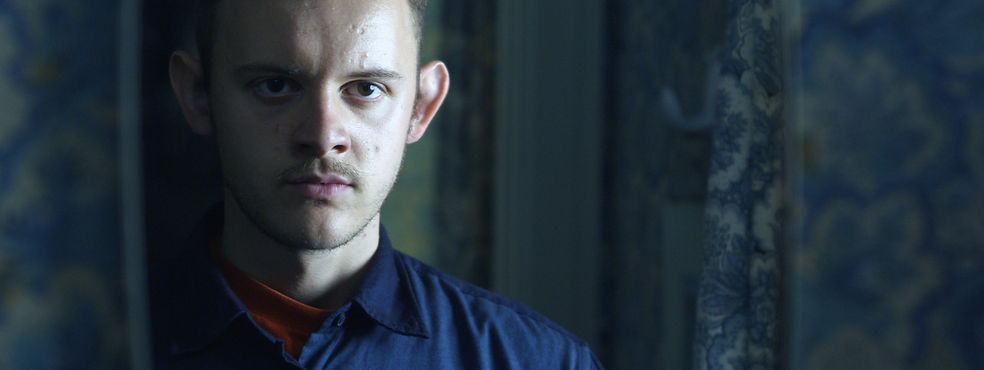

The Cast.
FREDDIE played by Will Medland
Will Medland is an internationally trained actor for stage and screen, and a classically trained singer from the North West of England. He began his performing career as a chorister at Chester Cathedral before going on to train in acting at the Guildhall School of Music and Drama. He later completed a BA at the Fontainebleau School of Acting, studying both there and in Athens.
Will has toured Europe and Central America performing in A Midsummer Night’s Dream with TNT Theatre and will appear at this summer’s Edinburgh Festival Fringe in Paola Veneto’s internationally acclaimed production Van Gogh: A Never Ending Descent.
He makes his screen debut as Freddie in Exit the Rabbit Hole.
PALOMA played by Lillian Nero
Lillian Nero is a British actress with American and Italian heritage. She completed a six-month Foundation Course at the Oxford School of Drama and is currently undertaking the school’s three-year Acting Diploma. During her conservatoire training, she has appeared in several productions, including A Doll’s House by Henrik Ibsen, in which she played Nora; ’Til the Stars Come Down by Beth Steel, as Hazel; and the Greek tragedy The Bacchae, in which she performed as Chorus Leader.
While classically trained for the stage, Lillian has developed an increasing focus on screen work. She made her professional screen debut in The Estate, directed by Carlo Gabriel Nero, in 2024.

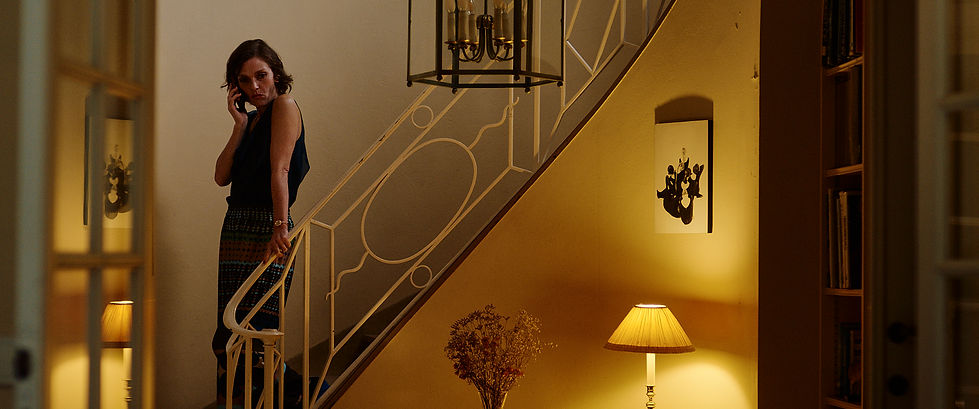
MOTHER played by Camilla Rutherford
Camilla Rutherford is a British actress who rose to prominence in the early 2000s. She gained recognition in Robert Altman's Oscar-winning film Gosford Park, before joining the world of Wes Anderson in The Darjeeling Limited and Paul Thomas Anderson in Phantom Thread.
Her career spans both British cinema and independent European productions. Praised for her natural elegance and subtle acting, she has built a solid career in critically acclaimed films.

THE FARMER played by François Damiens
François Damiens is a Belgian actor and comedian who rose to fame through his cult hidden-camera pranks, in which he played the famous character “François l’Embrouille”.
He later won over a wider audience with many film successes including OSS 117: Lost in Rio, L’Arnacoeur and The Bélier Family.
His talent lies in a unique blend of improvisation, sharp wit, and sensitivity, allowing him to excel in both comedic and dramatic roles. Today, he is considered one of the most popular and influential French-speaking actors of his generation.

FRAN played by Philippine Lazare
Philippine Lazare is a Franco-British actress, working across theatre, film and voice in the UK and France. She holds a BA in Drama from the University of Exeter, trained at the Fontainebleau School of Acting (FONACT), and is completing the MA Theatre Lab at RADA.
Her work spans stage and screen in both countries, including voice-over for the award-winning documentary Bacon Freud, face à face on France Télévisions. She is the co-founder of Mad Bad Productions, whose show Little Beast was presented at the Edinburgh Fringe Festival, and continues developing projects between London and Paris.
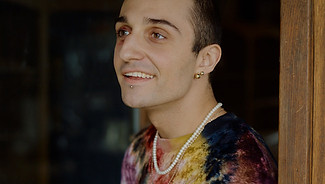
MAX played by Stav Gatzios
Stav Gatzios is a Greek performer born and raised in Athens. He trained at the Drama School of the National Theatre of Greece and also studied at the Fontainebleau School of Acting (FONACT) on a full scholarship under Jamie Bradley. Alongside his acting training, he studies Physics at the University of Crete and previously completed violin studies.
He has also worked in voice-over and voice acting, and has appeared in several Greek television series, short films, and music videos.

EMILIO played by Pépin Verhaeghe
Pépin Verhaeghe is a Belgian actor who began his training at the Fontainebleau School of Acting (FONACT) before completing a BA in Drama in Athens.
During his studies, he worked on several professional projects, including music videos and short films, and received the Best Actor award at both the Area 51 and Darkland Film Festivals for Root, directed by Jonty Toosey.
a Q&A with the director, Jonty Toosey
Why did you want to make this film, and why now?
While misogyny receives necessary scrutiny right now in our culture, I wanted to explore a different side of the conversation: the feeling amongst young men that being male is to blame for so many inequalities in society. Young men feel increasingly powerless and guilty and I wanted to look at the possible psychological impact of this perceived ‘misandry’, subtly investigating how a young man might feel under pressure, without actually converting to the ‘Manosphere’. This story aims to illustrate an issue that is very topical today compared to when I was in my 20’s and this is why I wanted to present it now.
What was the biggest challenge in making this film?
The biggest challenge for this film was finding the right cast to pull off this story. A casting mistake could be catastrophic to the success of the film. Working on a tight budget meant we couldn’t work with casting directors or agents and we would have to approach actors ourselves and hopefully convince them to jump onboard.
How did you go about choosing your cast?
We began our casting search at drama school graduation showcases. While there was an abundance of fresh talent, we initially struggled to find our protagonists, Freddie and Paloma. The roles of Emilio and Fran had been written specifically for Pepin Verhaeghe and Philippine Lazare, whom we had just worked with on my short film Root. I later saw Pepin in a play in Athens, where I discovered fellow FONACT drama school alumni Stav Gatzios. We now had Max. Will Medland, another FONACT graduate, was recommended to me. In Will, I had finally found the sensitivity and nervous energy I associated with Freddie. I really liked that my core cast all knew and liked each other.
Finding Paloma proved more difficult. I needed a younger person to play the role and with no casting agent to guide me I felt a bit lost. Then I remembered meeting Lillian Nero and was struck by her strong character and distinctive look. She had started at the Oxford drama school and was definitely pursuing an acting career. She fit the bill so well. She was our biggest gamble and I am certain it paid off.
To elevate this up-and-coming talent pool, Ariane Lippens - the producer of the film - brought industry heavyweight François Damiens on board. Quite an amazing coup. Finally, I convinced Camilla Rutherford to join us and we suddenly found ourselves with a rather impressive looking cast.
What was the inspiration behind this film?
This story was created around the special place we chose to film in. A house with quirky architectural details, an abandoned swimming pool, plants invading the house like triffids and beautiful surrounding forests. Building the story around a big party was a natural step for me, having organised many techno raves in my youth in the 90’s. Now that my own children are in their 20’s and partying, I can see the very similar escapist mentality with the next generation, searching for freedom and independence from parents, responsibilities and work pressures.
So I imagined a young man in his twenties, Freddie, eager to live life without limits, yet trapped in the shadow of his narcissistic mother who keeps trying to control every aspect of his story. Exit the Rabbit Hole becomes Freddie’s turning point and a call to action to live on his own terms.
How did you develop your creative vision for the film’s visual style?
Despite Freddie’s repressive life, the world that he is part of is full of colour. Our costume designer, Bren, created a dazzling display of costumes that we knew would be an integral part of the look of the movie. It was important that we found a way to make them work for the story. Whilst the four blended in with their party-crowd contemporaries in the city, once they reached the countryside it was important that they felt out of place. Juxtaposing their bright, outlandish clothes with the earthy browns and greens of the stunningly beautiful forests of the Belgian Ardennes helped us achieve this objective. They are temporary visitors to this natural world into which they don’t readily fit.
With Chris Stevens - the cinematographer of the film - we decided that marrying a naturalistic approach to lighting with a mise-en-scène style of camerawork and a widescreen aspect ratio, would help contrast the actors with the environment in which everything is going wrong.

What is a fun, crazy, or memorable anecdote from filming?
We had permission to crash and burn a car in the empty swimming pool. Our car specialist team prepared everything by removing all dangerous liquid, so that it would be ‘safe’ to burn. The local fire department came to inspect and left satisfied that they didn’t need to attend the burning. The sun set, and the time had come to torch the car. Our actors were to safely sit at the other end of the pool to watch it burn. We had 6 fire extinguishers at the ready to put out the flames. What could possibly go wrong?
More or less everything went wrong. We couldn’t get the car to burn, and then it began to rain torrents. It was a disaster. When the rain cleared, we tried again to set the car alight and this time thankfully it did burn but so incredibly slowly it looked like a joke, I felt utterly gutted my big scene was a complete failure. Then finally the flames grew bigger, and we got our precious scene. Putting the car flames out again was to prove more complicated than we anticipated. The flames grew so big the fire department had to return in a hurry. I never realised a car tire literally explodes when on fire. I was left shaking from the adrenalin of what could only be described as the slowest burner action shot ever.
What was the hardest scene to shoot?
The opening scene of the film was scheduled to be the final scene of our 20 day shoot. On paper it seemed great, in reality I had written myself into a literal rabbit hole. We are told to avoid working with children and animals for a reason and I had somehow included both in the film’s opening scene. It was the hottest day of the year, we were all exhausted from our very long and gruelling shooting schedule, and this was not what we needed to finish on. We lined the cute child up at the end of the animal’s cage to tease the pet rabbit with a stick. The boy didn’t want to be there, neither did the rabbit. The whole crew stood silent and motionless, like a diorama, as we tried again and again to get the shot. With no hope of reasoning with either child or animal, we had to abandon our shot plan and it left me feeling a bit foolish.
How much did your vision change from script to final edit?
When I wrote this story, I imagined it as a relentless rollercoaster ride of events, of family pressure and of relationships unfolding in a group of friends. I wanted to show the raw energy of youth, the unpredictable nature of life when things go wrong and how people behave very differently. Chris Stevens applied his own sensitive vision, and our editor, Matyas Veress, made the final edit a more penetrating and cinematic experience than I had originally imagined.

What do you want audiences to take away from this film?
At its heart, the film is about awareness and the opportunity we all have to choose our own paths. While the story follows a young man navigating a very personal set of challenges, his journey is a universal one, speaking to anyone at any age, who is ready to take that next step. I want to ditch the moralizing and give people a glimmer of hope wrapped in a bit of irony. At the end of the day, I just want to remind everyone that life isn't set in stone and absolutely crazy things can happen at any second.
What is the atmosphere you convey in your film?
I want people to feel on edge never quite knowing what is coming next in the storyline. We set the film in the isolated depths of the Belgian countryside in an abandoned house and its forest surroundings. Its remoteness and seclusion from urban civilization create an eerie and uncomfortable environment for the story to unfold. We never quite know where we are. Within this remote space, with little telephone or internet reception, Paloma, the unwanted guest, has to navigate her deteriorating health from an infected wound, and her seclusion from Freddie and his friends, who find her behaviour increasingly peculiar and don’t include her. It’s within this challenging atmosphere that the story boils up and over.
How did you approach the music?
Electronic music sets the overall tone and atmosphere. We wanted party scene music everywhere: in the car, in the club, in the house, blasting from the oversized sound system. The story of these young hedonists is defined by the music they listen to. To contrast with this electronic soundtrack, we needed to create a distinct film score that could pinpoint and enhance our key emotional moments and help drive the story.
What are the puppet scenes?
To punctuate the live action we decided to create puppet scenes. These scenes are an extension of Freddie’s state of mind. Sometimes a dream, sometimes a nightmare, they are visual interpretations of his subconscious imagination as he navigates through his difficult weekend. The scenes are made up of cut-out colour saturated 2D images with which we built moving dioramas. We created mechanical environments with moving backgrounds and trees and strange half-human, half-animal creatures appearing. The idea is that these scenes push the uncomfortable atmosphere and are both intriguing and disorientating for our viewers.

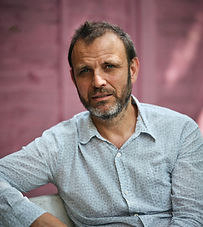
Jonty Toosey is a British film director and screenwriter with a career spanning two decades in advertising, documentary and drama. His adverts for leading brands have won him international awards at most leading advertising festivals including a couple of Cannes Lions.
Since 2022, he has completed a series of short films: Sangam, The Playdate, Dental Health, and Root. These have been selected in film festivals worldwide and won several best film and directing awards.
His next project after completing Exit The Rabbit Hole is an adaptation of Guy de Maupassant’s Boule de Suif exploring issues of morality and the hypocrisy of patriotism set in the debauchery and madness of a contemporary war.

Ariane Lippens is a Belgian director, editor, producer and screenwriter.
She began her film career shooting and editing making-ofs for feature films such as Bunker Paradise, Haute Tension, Goodbye Banana, Incognito, and Sans laisser de traces.
She wrote, directed, edited, and produced the short films The Cake, Le Devoir, and Grotto. Grotto has achieved international festival success, receiving 43 nominations and winning 10 awards to date.
She also made the films for the MIMA Museum exhibitions in Brussels: City Lights, A Friendly Takeover, Get Up Stand Up, MIMA Reload and Local Heroes.
Her next project is Le Pacte d’Envol, a film written by Marc Ponette, which she will direct and produce.

The two lives of Freddie.
In a nightclub with friends, where life is free and easy, and at his mother's home, where every choice and action he makes is ruthlessly picked apart.
PRESS AREA


ARIANE LIPPENS
MABASTE Productions SRL
2 Chemin Avijl
1180 Brussels
+32 473 929 888
